Hi PianoGroove family!
I wanted to start a sort of a blog where I share my thoughts on different topics here on the forum.
First topic I want to talk abut is scales and all things related to practicing them.
Is it important to practice scales? What are the main goals we can achieve by playing scales? When is it good to move to variated exercises and transcriptions from just playing scales?
Very often, especially if we started with classical piano, in the early years of our piano journey we practice scales. Usually they are major and minor scales, that teach us the basic “core” fingerings, as well as some technique and finger movement.
Here are examples of the right fingerings on some of the important keys:
fingerings.pdf (287.6 KB)
From our perspective, this is very useful, as it teaches us to “visualize” all keys on the keyboard, so we can find the right notes of each key easily.
Here’s an example of Db major scale, and how it “looks” on the keyboard:
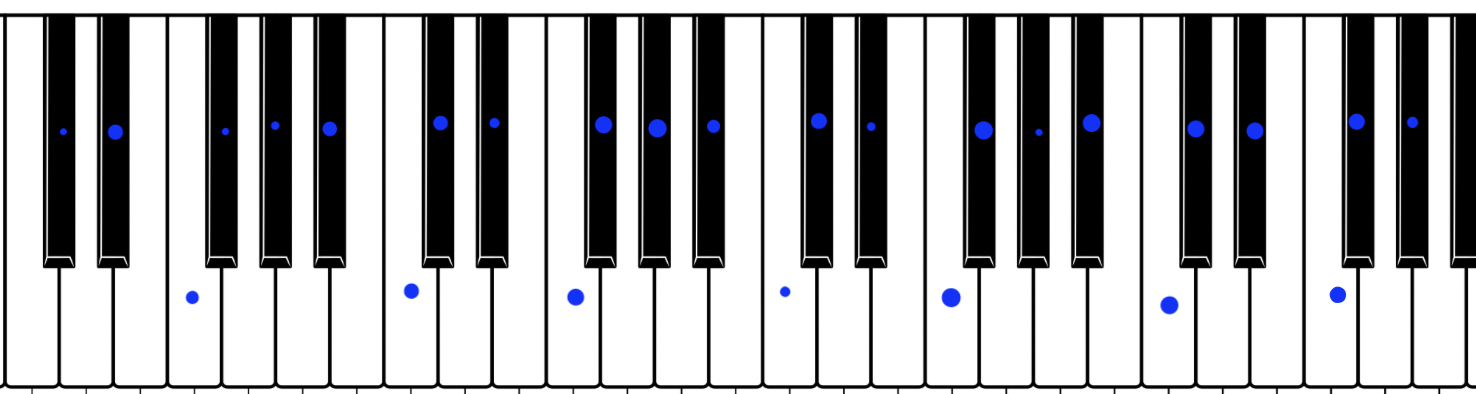
Playing the basic major and minor scales also teaches us the right fingerings, and when to turn you thumb under the the hand (ascending), or your 2nd, 3rd, or 4th finger over the thumb (descending).
However, technically, running scales up and down will get us only to a certain point. We need more exercises that help us to improve finger independence, co-ordination and so on.
For this I always recommend Hanon exercises no 1 through 20. Here’s an example of the first:
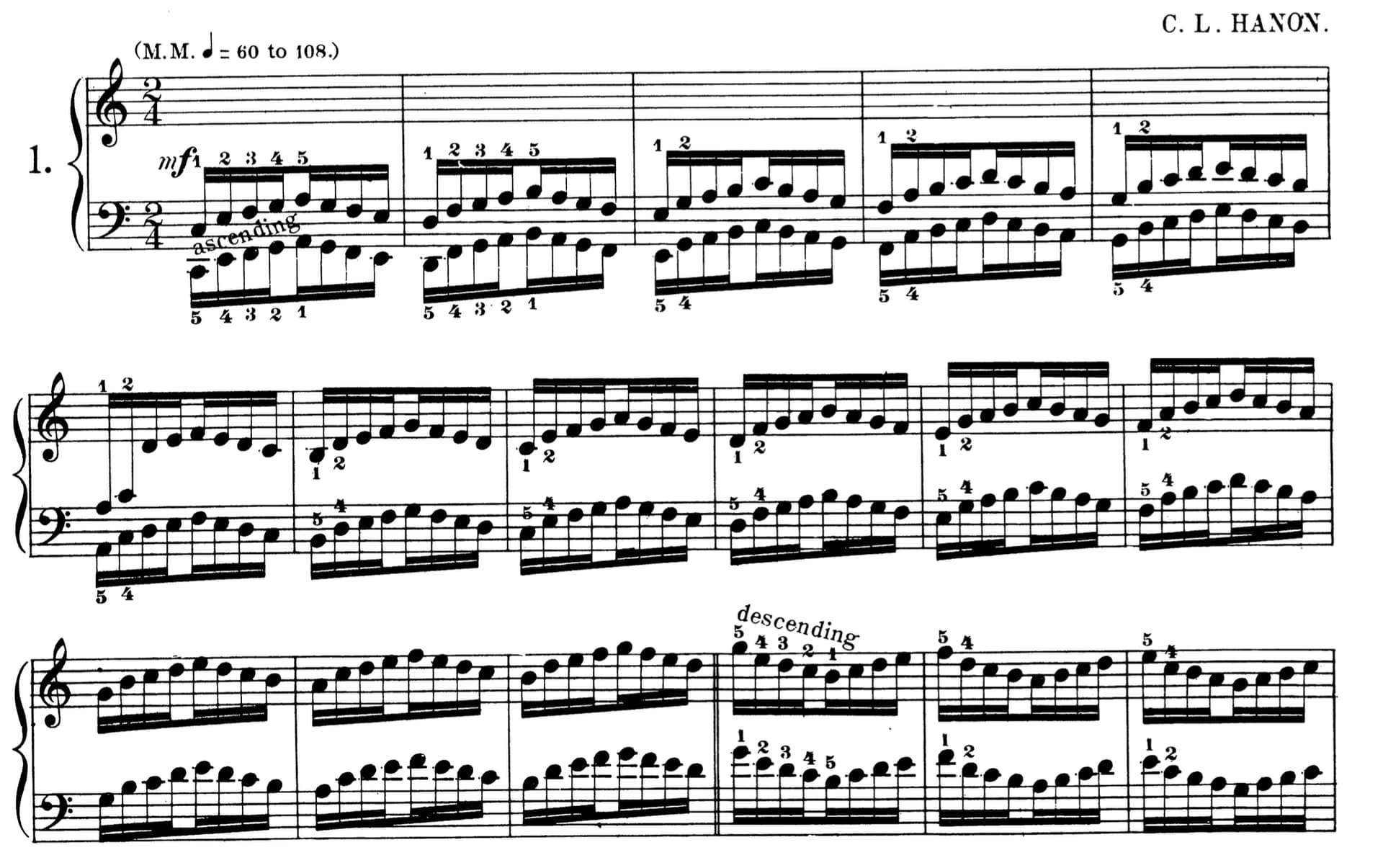
When practiced with metronome, these exercises not only improve our technical skills, they help us with our time feel as well as overall control of the fingers and sound.
To be honest, after playing the classical scales in my youth, and later practicing Hanon no.1-20 on a daily basis, I haven’t done any other exercises that ONLY focus on technique.
That being said, we have to remember that whatever we play or practice, can also be a technical exercise. Practicing soloing for example puts us into a situation where we have to use all the technical aspects mentioned above, and reveals us little things we can work on.
When we get to a point where the basic technical challenges don’t bother our playing, we can start working on transcriptions. This is, from our perspective the best exercise for us jazz/rhythm music players.
There are numerous things we learn from playing transcriptions; not only technique, but the right kind of rhythm and time feel, phrasing, language, sound, list goes on and on. Also playing a transcription over the original recording forces us to listen the track very thoroughly.
That’s my 2 cents on practicing scales, please send me any questions you might have on the subject!
All the best,
-Tuomo
