Hi PianoGroove family!
Here comes a follow-up to the previous blog about the famous drop 2 voicings.
As I said earlier, if you patiently follow these steps, and move on only after you feel totally comfortable on the previous step, you will master these voicings, and learn to use them and variate them in sophisticated, musical ways.
Now, let’s move on.
Once you can play and use the “core” voicings we learned in the part 2. of the first post, we can start to variate them.
The key is to find nice voice leading throughout the 251s.
The main rule is to have the same amount of notes in every chord, meaning that we don’t “drop out” any of the chord tones; we need to be able to find five notes.
Now, as an example, let’s take the first inversion:
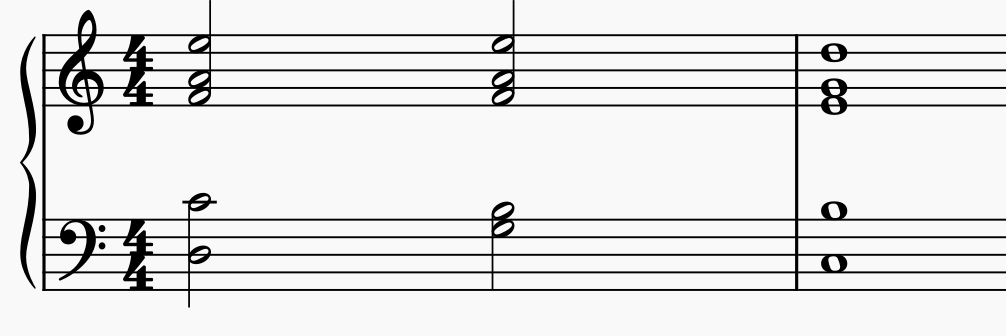
Let’s start with movement in the 9th and the 5th:
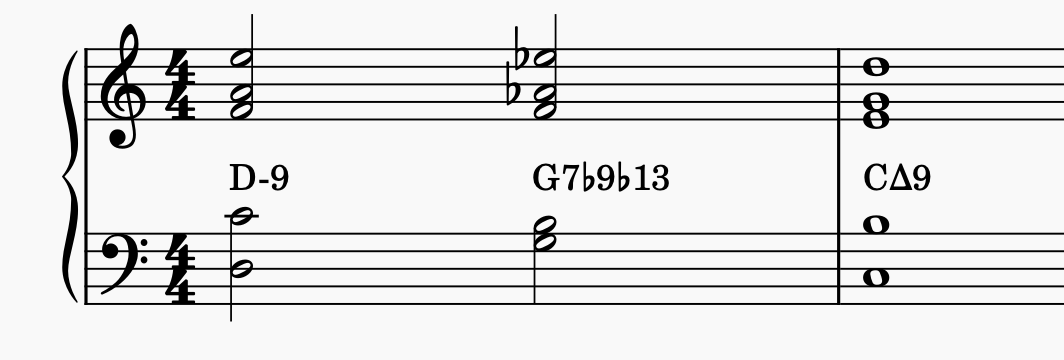
Now, by just having chromatic movement in the voices 9 and 5, we created nice voice leading, and changed the colour of the dominant chord to a more sophisticated sound.
Here’s the same with the other inversion:
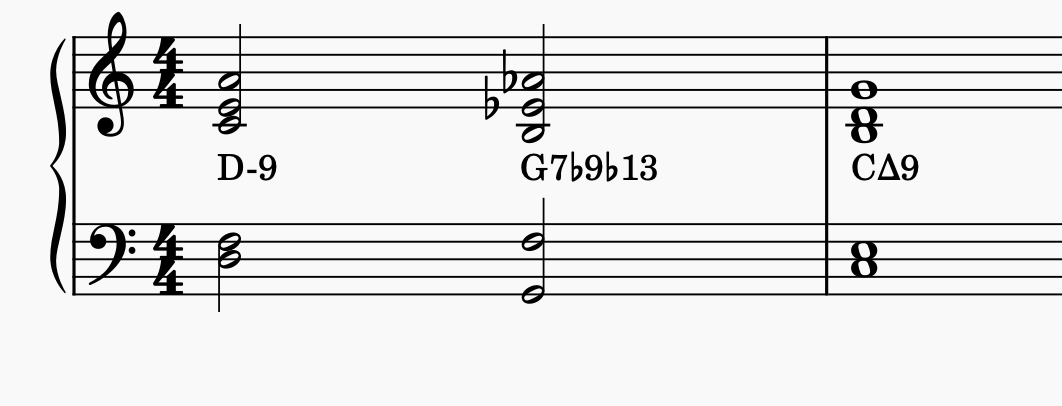
This way, we can variate these chords in many ways; just change the ninth, or just the fifth, or both etc.
Point is to try these things out, and be creative. We can even start the new voice leading from the 2 chord, and continue it to the tonic, for example:
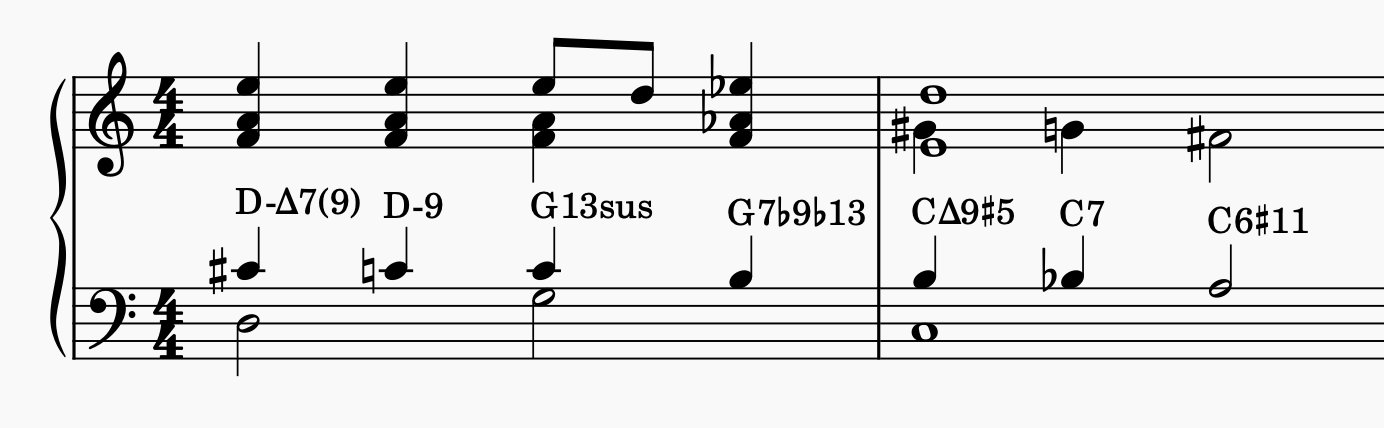
Voice leading throughout the cadences and chord progressions is the key to good voicings and musical choices. With practice this will come easier, just remember to keep the same amount of notes throughout the cadence. In tonal harmony chord tones tend to move relatively close to each other, rarely any jumps bigger than major 2nd.
Here’s a longer example of voice leading through a progression, the first 9 bars of ‘There Will Never Be Another You’:
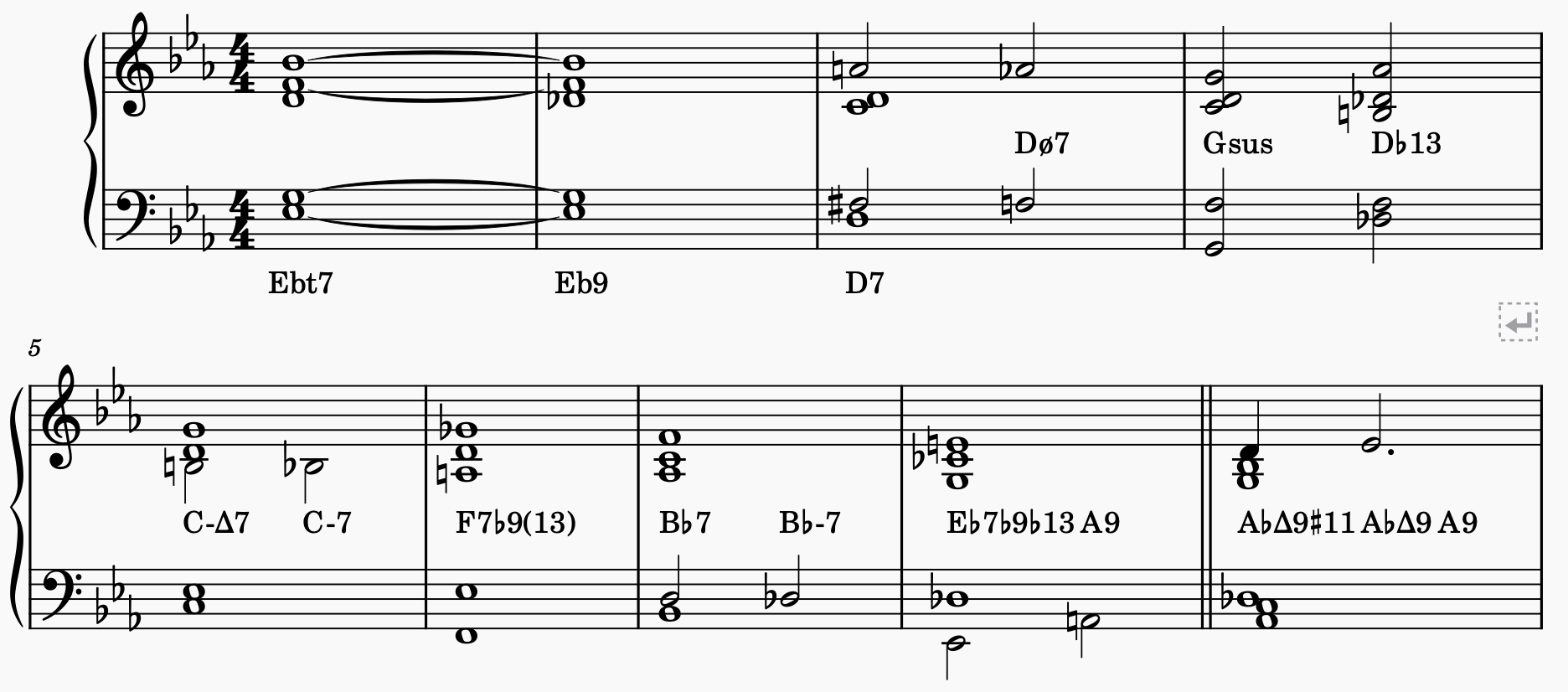
And that’s pretty much how we do it!
Lastly, here are couple of transcription examples from the great Bill Evans, on how to use these voicings in a highest level, enjoy!
April_In_Paris.pdf (299.5 KB)
Like Someone In Love Transcription.pdf (35.9 KB)
Never Let Me Go Transcription.pdf (35.9 KB)