Hi PianoGroove family!
This week I’d like to talk about how to learn a jazz standard.
Over the years I have learned many songs, and when reflecting on the process of learning them, I can detect several important points that have been important in learning on all the levels from beginner to more advanced.
Learning song is like practicing anything else; in the beginning it takes a long time, feels too difficult to memorise, harmony might seem hard and/or unfathomable etc. However, over time, when using some time every day on learning songs, that process becomes easier and faster. Here are my guidelines on how to do it in a sufficient way.
I have taken a song ‘Embraceable You’ by George and Ira Gershwin as an example for today.
- First - Melody
The very first thing we need to focus on is the melody. That is the most important part of a song, as harmony moves and functions pretty much the same way in all songs, melody is the one that is different.
Best way to learn and memorise the melody is to listen different versions of the song, as well as to learn to sing it. This doesn’t mean you have to learn to sing it well, even quietly in your head is fine  Point is to memorise the melody without playing it.
Here are few versions of our example song:
This way you also can learn the lyrics, which I find an important part of a song, and somewhat neglected by jazz musicians. I think the lyrics are a half of the song; as the song was firstly written simultaneously with the lyrics, the words give the song its story and meaning. After all, in most of these songs, it is the lyrics and the story that is important, music is there just to support the worlds!
Once we have memorised the melody without instrument, we can check a lead sheet. I found a pretty good one, sharing it here:
embraceable you.pdf (938.5 KB)
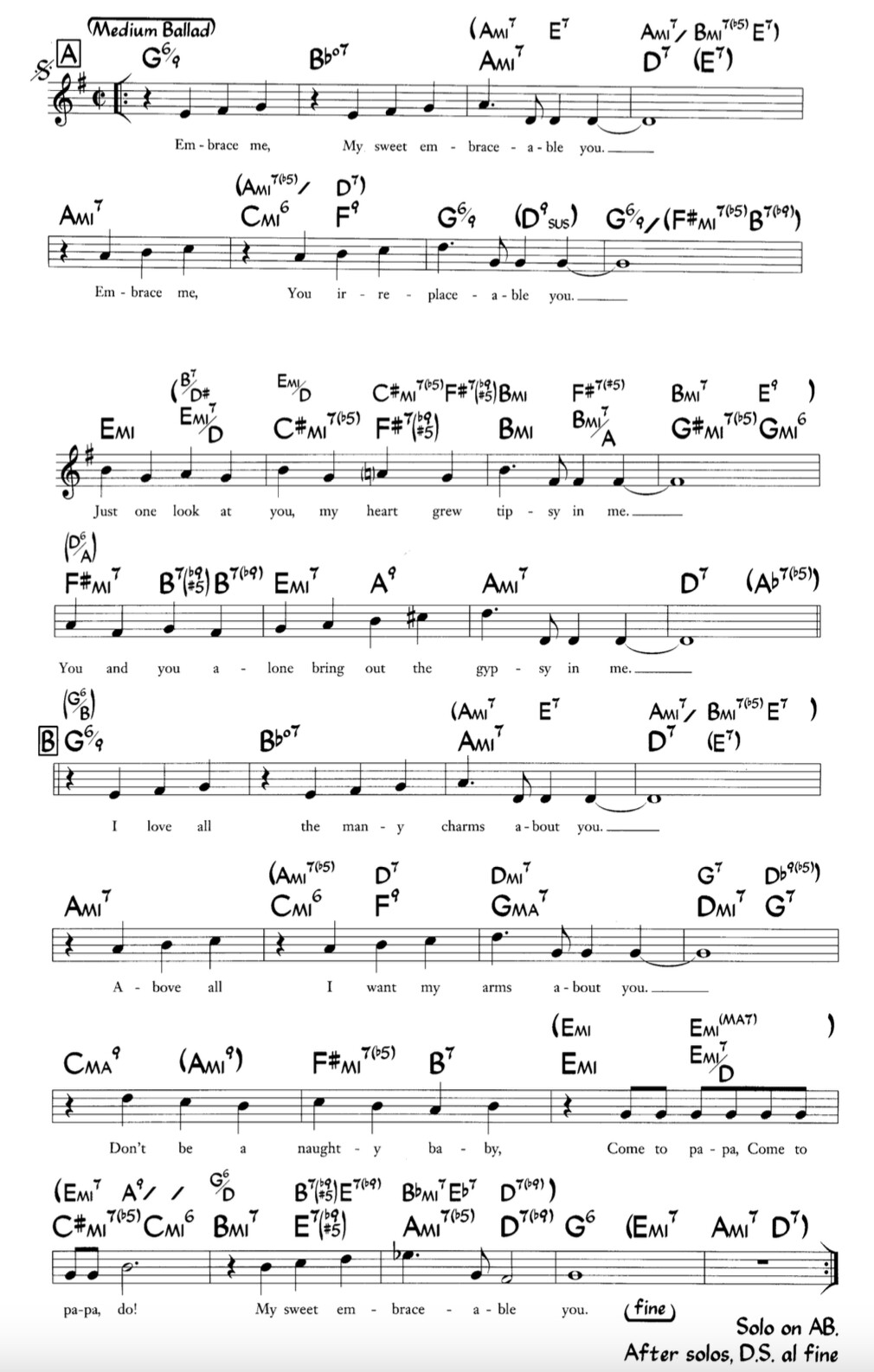
Now, if you use a lead sheet, follow the melody (without an instrument, as the recordings might be in a different key!) simultaneously while listening a vocal version of the song. This way you can see what is different, maybe the lead sheet has mistakes, or maybe the melody is sang/interpreted differently on the recording. This “research” makes you go deeper into the song and its melody.
After memorising the melody, and doing research on different approaches to it, we are ready to move forward!
- Second - Form
This should come easily after learning the melody.
As we know, most standards follow similar forms; AABA, ABAC, AABAC etc. Also in the case of “Embraceable You”, it follows a form ABAC. We can clearly see and hear it from the melody: the first 8 bars’ melody appears again starting bar 17, but bars 9-16 and 25-32 are different. Don’t pay attention to the marking on the lead sheet (remember that lead sheets are “road maps”, they are just a one version of how to interpret the song, and NOT the truth), like in this case, lead sheet shows the form AB, which is technically correct, but the form can be viewed a more understandable way as ABAC.
So now, when we have established the form by the melody of the song, we can take a look into the harmony, and make sure it also fits the form ABAC. Again you can do this by listening and checking lead sheets. In this point don’t get stuck with details, as long as the harmony is somewhat similar on the A sections! No stress if we don’t hear/understand all parts!
- Third - Harmony
And now to the last part.
Let’s start with checking the lead sheet and AGAIN listening versions. We need to establish the version of the harmony we want to play. As I said earlier, lead sheets are not the truth, they are just one way of harmonising the song. The same goes to different recordings; there might be different choices harmonically than in the lead sheet or other recordings. This seems like an overwhelming situation, but simultaneously it’s a blessing; we can pick what harmonies we like!
I recommend to start with the basic harmonic structure, find the 25s and main common spots where the harmony is moving to, IV, VIminor etc.
Here is the lead sheet with the main chords, I erased the things that might not be important at this point
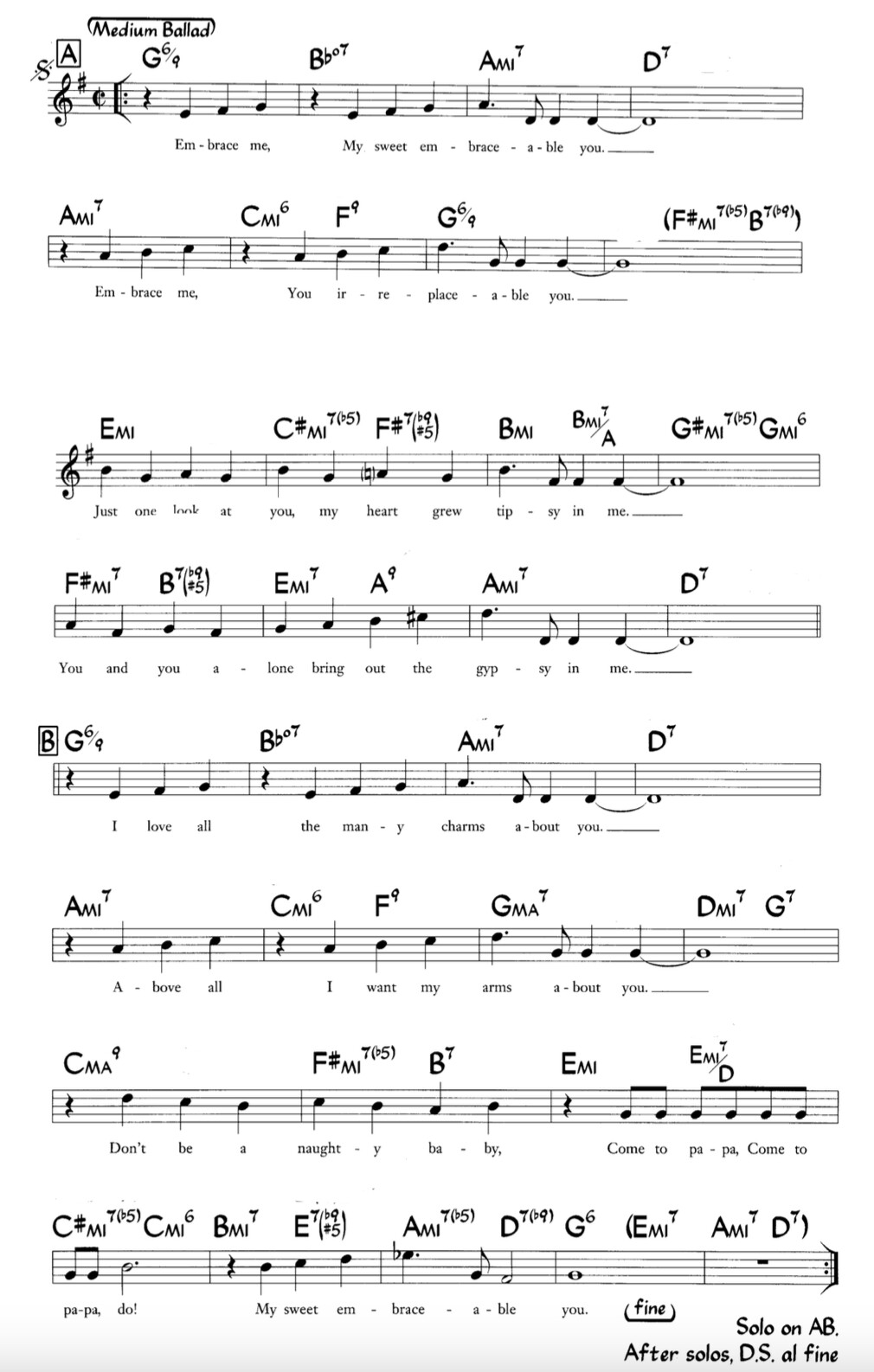
First, learn to play just the bass note and the melody. Nothing fancy, just to get the roots in right places. If you followed the steps, this should be easier because you already know the melody well!
Then, we start adding voicings. This might start to get little tricky, as we have soo many options from now on, but I HIGHLY recommend to start with the basics.
I would recommend to use the 3-note voicings, I’m not going deeper into them here now, but here’s a tutorial seminar on the subject:
The goal is to harmonise the song with these voicings, by playing them underneath the melody.
Of course after this, depending on you level of knowledge, you can add whatever voicings you want!
Now we have learned the song! This is the point where we can play the song and hopefully understand it pretty well.
Now, once we have gotten the melody and the basic harmony/3-note voicings under our fingers, we can check out more harmonic choices. You can again go and listen versions, pick up things you like etc. Also you can check the lead sheet again and try out the alternative chord changes. Fun part is that you can pick and choose whatever you like!
I know we didn’t get into understanding harmony here, but that’s another subject for another time. However, once you learn to understand how harmony works, that information will help you in this process as well, especially in the last part where you add/spice up you chords.
I hope this gave you guys something to think about,
I’m happy to answer any questions, and am really interested in hearing you thoughts and/or struggles on the subject!
All the best,
-Tuomo